Verne Dawson
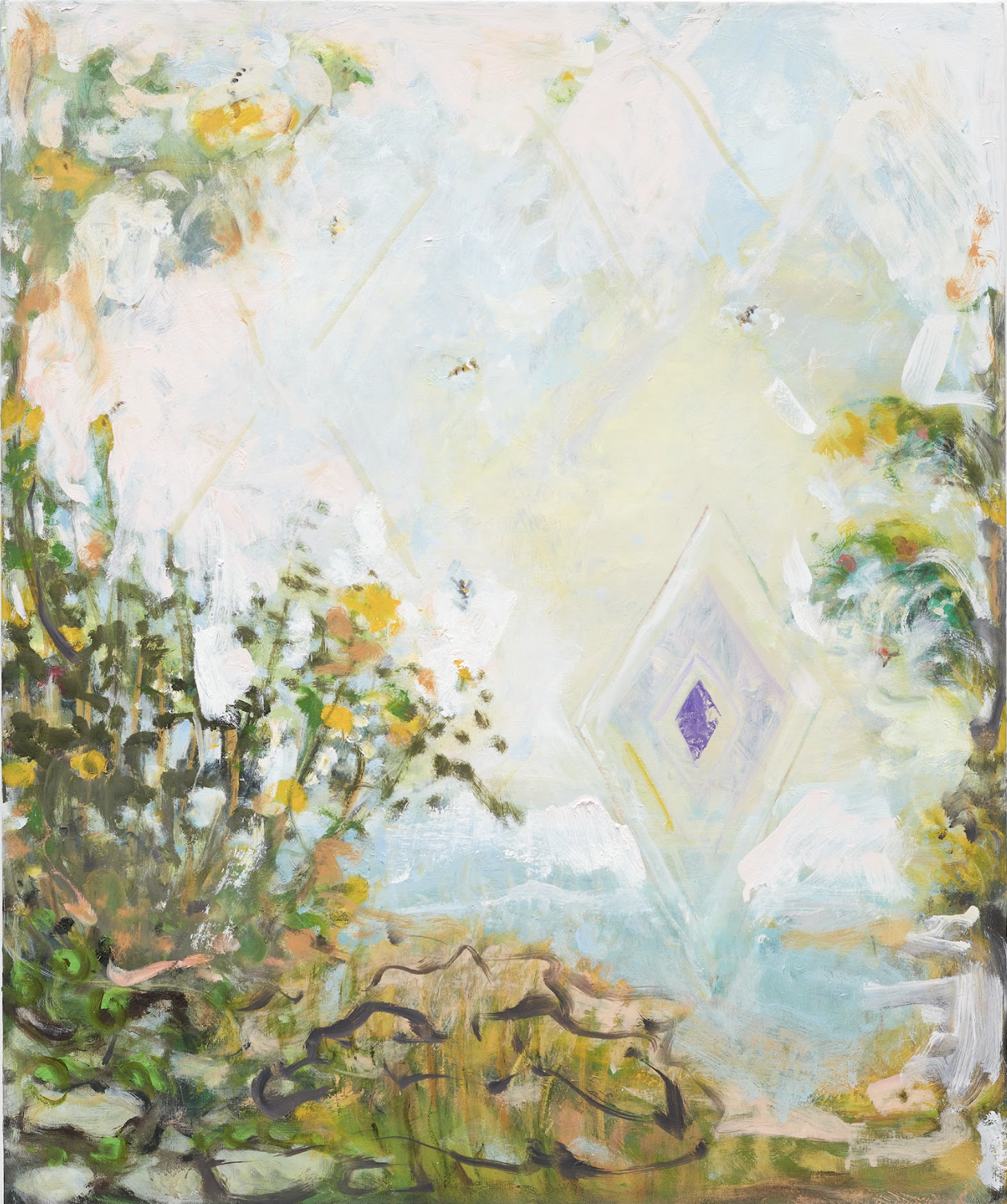
The work of American painter Verne Dawson (*1955) interweaves history, collective memory, and the concept of time as mutually permeating layers of experience. In landscapes, cosmological scenes, still lifes, allegorical compositions, and abstract paintings, he develops a non-linear visual narrative in which references to history, science, folklore, and personal mythology converge. His subjects create a complex pictorial world where different temporal planes naturally overlap.
In Dawson’s work, human existence is understood as an integral part of the natural order rather than its opposition. This position is conveyed through a painterly language rooted in observation, memory, and improvisation, and grounded in folk forms and traditional pictorial structures. Dawson’s paintings point to the enduring continuities of human culture and nature, while also emphasizing their transience – both on the scale of human existence and within the broader context of the Earth itself. His work can thus be read through an Anthropocene perspective, in which humanity is understood as a decisive force shaping the current state of our planet.
Verne Dawson lives and works between New York and North Carolina. His work has been presented at leading international institutions, including MoMA PS1 and Whitney Museum of American Art in New York, the Palais de Tokyo in Paris, and the Musée d’Art Moderne de Paris.